
Raman Spectrometer for Non-Contact Analysis of Hazardous Substances
Characteristics
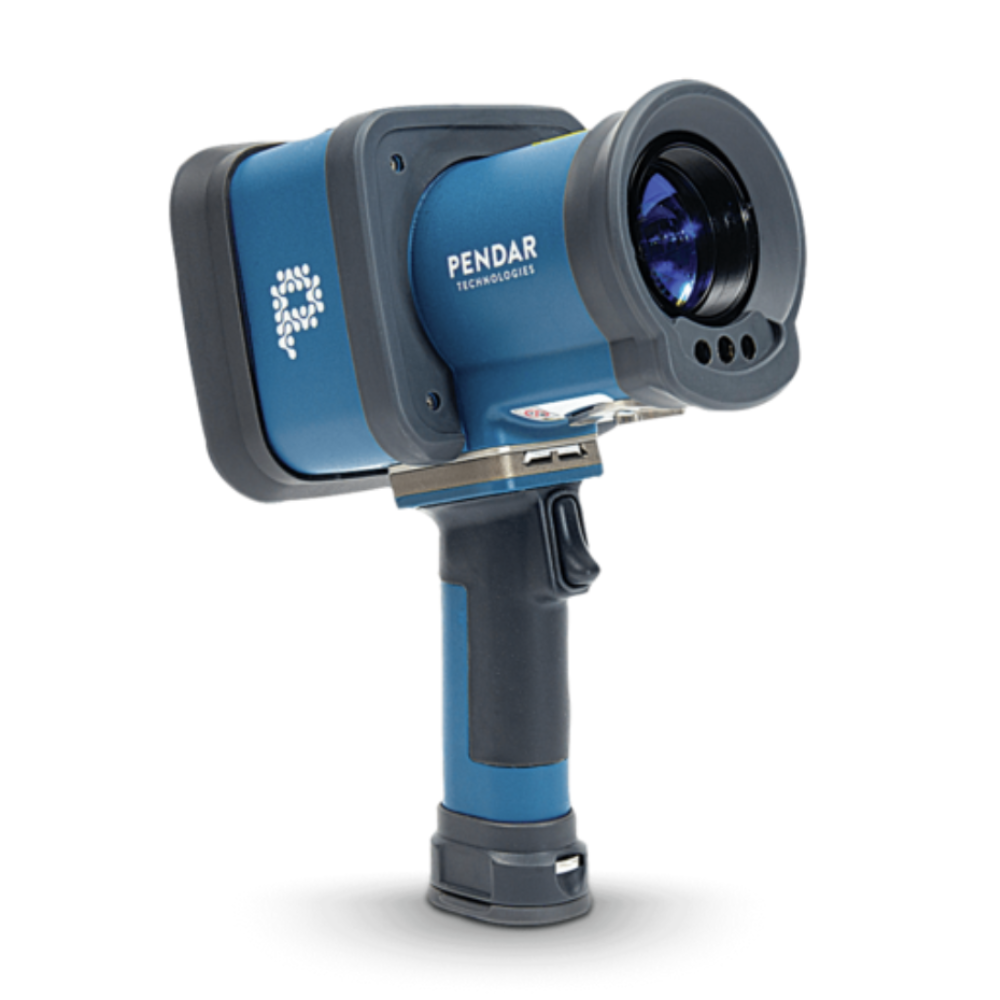
The revolutionary Pendar X10 Raman spectrometer for non-contact analysis of hazardous substances from the US-based company Pendar is now available in an enhanced second-generation version. It is the result of many years of development, involving a large part of the original development team that, many years ago, developed the first commercially successful handheld Raman spectrometer for the detection of hazardous substances – the Ahura FirstDefender. It became a benchmark for all current spectrometers, and many of the solutions introduced by its developers at the time (and subsequently patented) have yet to be surpassed. The “Ahura” spectrometers represented a technological breakthrough when they were introduced to the market, and Pendar X10 spectrometers now likewise introduce new breakthrough technologies that enable the analysis of samples that could previously not be measured using Raman spectrometers (highly fluorescent samples, black samples, and thermally unstable samples).
Video introducing the Pendar X10

The second generation of the Pendar X10 delivers a significant technological leap and addresses fundamental limitations of existing Raman spectrometers. The second-generation spectrometer is smaller, lighter (1.5 kg), faster (with a typical analysis time of just a few seconds), and capable of measurements from distances of up to 200 cm. It uses unique hardware technology to suppress the effects of fluorescence, eliminates the risk of ignition/initiation of energetically unstable materials, and enables integration with a wide range of EOD and CBRN robots. The spectrometer also employs a completely new generation of chemometric algorithms, which further improve identification reliability, particularly for complex mixtures. Further information about the improvements introduced by the second-generation Pendar X10 can be found below.
Key Features
- Non-contact analysis with the ability to measure from distances of up to 200 cm (second generation) from the sample. The system can also measure small samples or, for example, inspect the contents of drums and transport containers through filling openings.
- The ability to measure through several layers of packaging, for example, to analyze a sample inside a fume hood through a plastic window or through thick bottles. The principle is simple: if the sample inside the container can be seen, it can be measured. The technology used eliminates the potential risk of damaging the packaging when analyzing highly toxic samples (there is no risk of burning a hole through the packaging).
- High measurement speed for routine samples. The typical analysis time for ammonium nitrate placed in double packaging (a plastic bag and a polyethylene transport container) is between 5 and 10 seconds, depending on the level of ambient light at the measurement location.
- Ability to measure highly fluorescent samples. The performance of the technology used significantly exceeds that of all Raman spectrometers with 1064 nm lasers, without the negative effects associated with the use of a 1064 nm excitation laser (reduced sensitivity, higher spectral noise, and thermal destruction of samples). The spectrometer can also measure certain extreme drug samples or specially marked plastic explosives, where all previously available Raman spectrometers have failed. When testing ecstasy tablets, the Pendar X10 was able to identify MDMA in all tablets within a very short time (typically 5 to 30 seconds for extreme samples).
- Ability to safely measure thermally unstable samples that cannot be measured using conventional Raman spectrometers (black gunpowder, mercury fulminate, or silver fulminate). An example of mercury fulminate identification can be viewed at the link below: https://vimeo.com/511420029/5b969a475b
- Ability to analyze heterogeneous and spectrally challenging samples (e.g., street-grade drugs). The spectrometer uses state-of-the-art chemometric algorithms in combination with higher spectral resolution. The quality of the spectral data is comparable to that of high-quality laboratory systems. The Pendar X10 therefore provides improved fully automated analysis capabilities even for complex samples. The spectrometer also enables surface scanning, thereby reducing the influence of sample heterogeneity. This issue is typical of certain drug samples in tablet form, which exhibit highly heterogeneous distribution of the active substance throughout the tablet. Standard Raman spectrometers can produce inconsistent results in repeated measurements of such samples (the spot size is on the order of hundreds of micrometers, so the influence of sample heterogeneity becomes significant).
- Safe measurements without protective eyewear; the laser used is Class 3R.
- Ability to integrate with robotic platforms (EOD and CBRN robots). The Pendar X10 is an ideal solution for integration with robotic platforms. The standard system can analyze samples from distances of up to 2 m. The instrument can be equipped with an integrated camera that precisely displays the measurement location, including visualization of the laser focus on the sample surface. The spectrometer can communicate directly with the robot (using the robot's own communication channel), or it can be equipped with its own wireless communication module and a dedicated control tablet for the spectrometer operator. This approach also enables integration with older robot models.
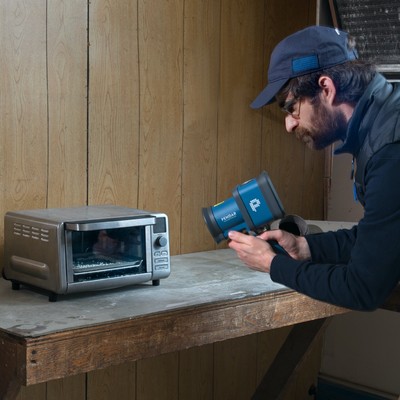
Stand-off Raman spectroscopy (spectroscopy for remote detection) represents a technological challenge, particularly when it is intended for use under normal ambient lighting conditions. Highly efficient collection optics must be combined with a new generation of “super” detectors and high-performance electronics. It is important to realize that the measurement involves detecting very weak Raman signals superimposed on a spectral background that is orders of magnitude stronger. The Pendar X10 spectrometer now achieves all of this while weighing less than 1.5 kg, including the battery. The instrument was first presented outside the USA at the LaborExpo 2019 exhibition (where it received a Top Product award). It also received an R&D 100 Award and, in strong competition, won one of the most prestigious awards in the field of photonics, the Prism Photonics Award 2020 in the Security Technology category.
Further information can be found in the information brochure below and on the manufacturer's website, including videos demonstrating the Pendar X10 in action: https://www.pendar.com/products/pendar-x10-handheld-raman/
The Pendar X10 is available from RMI. If you are interested in a demonstration, please contact us.
